

Nurturing Mums through Pregnancy, Delivery, and Recovery

Did you know that the concept of safe motherhood not only includes physical health but also encompasses social, emotional, and cultural factors?
Did you also
know that approximately 1 in 5 women experience a mental health condition
during pregnancy or in the first year after childbirth, according to statistics
from the World Health Organization?
We are
putting out a poignant reminder of the critical importance of ensuring maternal
health and well-being. Safe motherhood underscores the need for accessible,
equitable, and quality maternal healthcare services.
Motherhood
should ideally be a time of joy and fulfilment for the expecting mother, her
family and the community, but for many women, it can be fraught with challenges
and risks. From pregnancy complications to postpartum depression, the journey
of motherhood can impact both the physical and mental health of women.
Globally,
approximately 800 women die every day due to preventable causes related to
pregnancy and childbirth. This stark reality highlights the urgent need to
prioritize maternal health initiatives, improve healthcare infrastructure, and
enhance education around prenatal care.
There are 6
basic pillars of safe motherhood:
Family
planning: Family
planning is the consideration of the number of children a person wishes to
have, including the choice to have no children, and the age at which they wish
to have them. Things that may play a role in family planning decisions include
marital situation, career or work considerations, and financial situation. If
sexually active, family planning may involve the use of contraception (birth
control) and other techniques to control the timing of reproduction. Visit any
good healthcare centre for more information.
Antenatal
care: Prenatal
care, also known as antenatal care, is a type of preventive healthcare. It is
provided in the form of medical checkups, consisting of recommendations on
managing a healthy lifestyle and the provision of medical information such as
maternal physiological changes in pregnancy, biological changes, and prenatal
nutrition like prenatal vitamins, which prevents potential health problems
throughout the course of the pregnancy and promotes the mother and child's
health.
Obstetric
care: Obstetrics
is the area of medicine that specializes in the care of women during pregnancy
and childbirth. If you are expecting a baby, it is an important element of your
healthcare to ensure you and your baby stay as healthy as possible during
pregnancy and beyond. It is paramount to have a good obstetrician before and
after childbirth.
Postnatal
care: Aside from
taking care of your baby, core care should also be provided to you as a new mum.
This includes checking for tears, bleeding, and blood
clots; vital signs checks, providing micronutrient supplementation (vitamin A,
iron, folic acid, etc.) and mental health support. Maternal mental health is not just an individual
concern but has far-reaching implications for the child's emotional, cognitive,
and social development. Research has established the interplay between a
mother's mental well-being and her ability to provide responsive caregiving.
Post-abortion
care: The
post-abortion period is the third and final part of the continuum of care for
abortion. Post-abortion care includes any or all of the following, as needed or
desired: optional follow-up check-up, management of residual side effects or
complications, and contraception services.
Control of
STI/HIV/AIDS: Taking HIV (or others) medicine and maintaining an undetectable viral
load during pregnancy, labour and delivery reduces the chances of transmission
through breast/chestfeeding to less than 1%. If your partner has HIV, encourage
your partner to get and stay on treatment.
Maternal Health
Campaign, This May!
Investing in
maternal health not only
benefits individual women but also contributes to healthier families, stronger
communities, and sustainable development. We are aware of this fact and
continue to drive initiatives targeted at supporting women through their perinatal
period.
In light of this, on May 25, 2024, Gynix Afrika offers a day-free comprehensive antenatal
care outreach and sensitization to pregnant women in Ogo Oluwa LGA in
Ogbomosho, Oyo state, Nigeria.
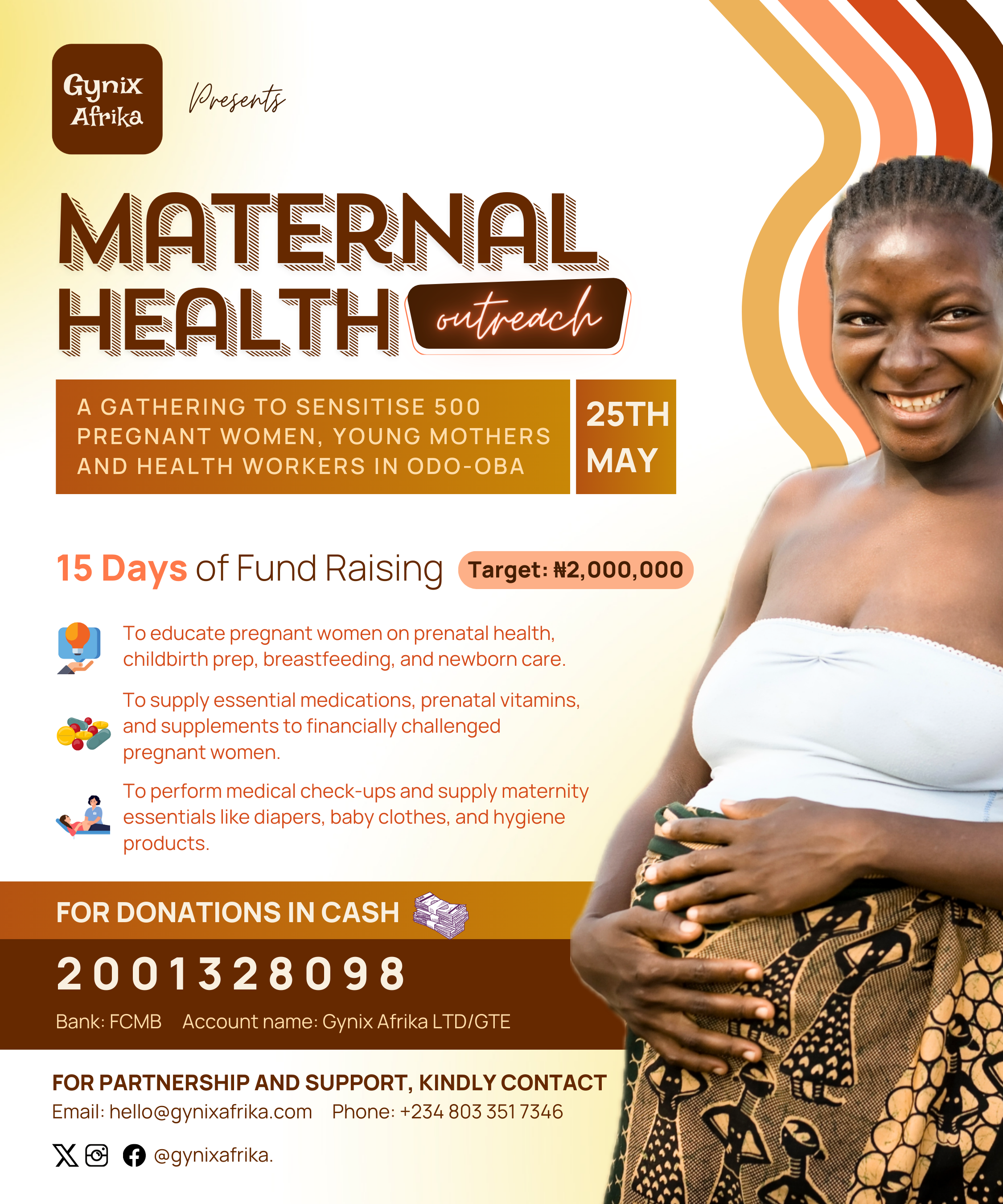
This programme seeks to stall high maternal mortality and low antenatal care uptake through education, medical services and dispelling myths.
One of the objectives of this outreach is
to screen at least 200 pregnant women on that day so as to detect and refer any
pregnancy-related risks and complications and to also dispense routine drugs, e.g.
folic acid, ferrous sulphate etc., to participants at the outreach
Would you love to contribute to safe
motherhood in Nigeria? Kindly make a voluntary donation by clicking the donate
button on our website. For more questions, clarifications or sponsorship,
please send an email to hello@gynixafrika.com
or call us at: (+234) 803 351 7346.
Together, we can collaborate towards a world where motherhood is truly safe and celebrated.
Other articles

Copyright © 2026 Gynix Afrika. All rights reserved.